If you’re just getting started with search engine optimisation (SEO), or have already dipped your toes in its waters but aren’t experiencing the results you initially hoped for, you may need to strengthen your campaign by understanding and implementing the four pillars of SEO.
These are the key areas you need to focus on to improve your site’s visibility and performance.
Overview of the 4 Pillars of SEO
One useful way to organise SEO is around four pillars:
- Technical SEO
- On-page SEO
- Off-page SEO
- Content
This is an educational framework rather than an official Google classification, and some organisations group SEO activities differently. Nevertheless, each pillar plays an important role in making your site useful and accessible to both people and search engines.
Let’s explore these four SEO pillars in more detail. Understanding them gives you a clearer roadmap for improving your SEO campaign and attracting more relevant, high-quality traffic to your website.
Let’s go!
Key Takeaways
Technical SEO is responsible for your site’s structure, security, speed, mobile responsiveness and search-engine accessibility.
SEO-friendly content satisfies search intent and demonstrates your topical knowledge through useful, original content.
On-page SEO deals with optimising content and web pages through the effective use of headings, title tags, URLs, internal links and images.
Off-page SEO involves strengthening your authority and online reputation through legitimate links, mentions, reviews and other external signals.
Pillar 1: Technical SEO – The Backbone of Your Website’s Performance
At its core, technical SEO takes care of behind-the-scenes elements that help make your website crawlable and indexable by search engines.
The technical aspects of your website include the following.
Site Speed
Have you ever clicked on a website that took ages to load? Annoying, for sure.
Page performance affects user experience and can contribute to search success as part of the broader page experience. However, speed is not a simple guarantee of higher rankings, and relevance and content quality remain essential. Use tools such as Google PageSpeed Insights to identify performance problems and review both laboratory results and available real-user Core Web Vitals data.
The current Core Web Vitals measure loading performance through Largest Contentful Paint (LCP), responsiveness through Interaction to Next Paint (INP), and visual stability through Cumulative Layout Shift (CLS).
Compressing images, using effective caching, reducing unnecessary redirects, and minimising or deferring unneeded CSS and JavaScript are some of the ways you can improve page performance.
Mobile-Friendliness
With a significant share of web traffic coming from mobile devices, having a mobile-friendly site is a necessity.
Google uses the mobile version of a site’s content for indexing and ranking. This makes it essential that your website is responsive and provides a smooth experience on mobile and other devices.
UX and Navigation
Your website must be easy to navigate for visitors who want to find information or buy something. This is an important part of providing a good user experience.
It involves having clear digital “signposts” and a well-organised layout that guides visitors smoothly from one section to another without confusion or frustration.
Clear navigation also helps search engines discover and understand important pages. Use descriptive menus, breadcrumbs and logical page hierarchies to identify and organise related pieces of content. Avoid orphan pages and make sure important destinations can be reached through internal links.
Pillar 2: On-Page SEO – Optimising Your Way to the Top
On-page search engine optimisation is the art and science of improving individual web pages so that they can earn relevant organic traffic and provide a useful experience.
It’s the fine-tuning process that helps your content stand out in the vast sea that is the internet.
Optimising your web pages makes them clearer and more useful to both search engines and users. This process can improve your site’s visibility and relevance while supporting user engagement.
A highly effective on-site SEO strategy considers the following core elements.
Keywords and Search Intent
It begins with understanding how your audience searches and what they hope to accomplish.
Keywords are the terms and phrases people may use to find specific information. For example, a person looking to hire an electrician in Sydney may search for “electrician near me” or “electrician Sydney.” Search volumes for queries like these change over time and vary according to location, season and the keyword-research platform used.
Once you understand the relevant searches and their intent, use that insight to create content that directly answers the audience’s needs.
Integrate relevant words and phrases naturally into your pages. You do not need to force every exact-match keyword or variation into the copy. Keyword stuffing repeating terms unnaturally in an attempt to manipulate rankings should always be avoided.
Title Tags
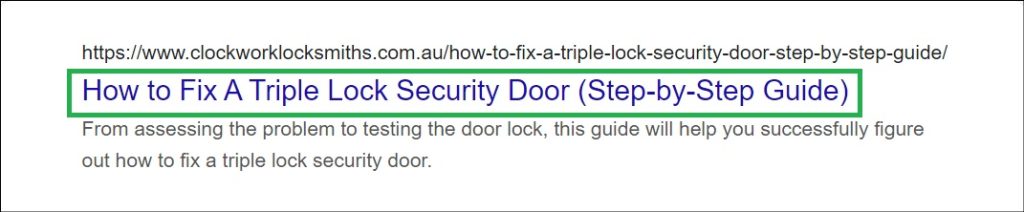
Your title tag may be used as the main title users see in search results, although Google can generate a different title when it believes another description is more appropriate.
It is essentially your headline and attention-grabber.
A good title tag should be unique, concise and accurately describe the page. Include the primary topic naturally, placing important information early when practical. There is no fixed character limit that guarantees full display because truncation depends on the available screen width and the title Google chooses to show.
Meta Descriptions
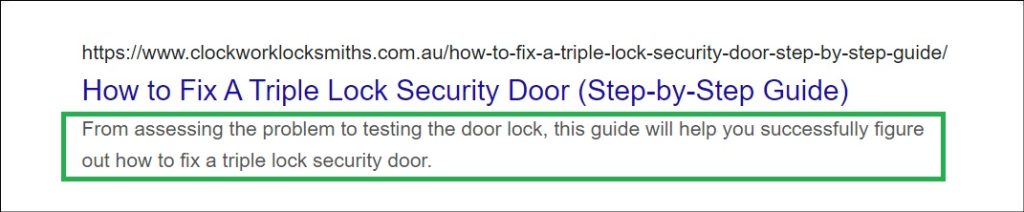
Meta descriptions do not directly determine rankings, but a useful description can influence whether a searcher chooses your result.
Craft a persuasive and accurate meta description that describes what users can expect from the page. Include the primary topic naturally where appropriate, but avoid repeating keywords unnecessarily. Google may display a different snippet based on the user’s query.
Pro tip: SEO plugins such as Rank Math can preview how a title tag or meta description may appear on desktop and mobile. Treat the preview as a guide rather than a guarantee of what Google will display.
Header Tags (H1, H2s and H3s)
Your H1 or Heading 1 is different from the HTML title tag, although the two may use similar wording. The H1 should clearly describe the page’s main subject; it does not need to contain an exact-match keyword.
Header tags make your content more structured and organised.
Use H2 and H3 headings to divide the content into digestible sections. Write headings for clarity and incorporate relevant terminology naturally where it helps readers understand the page.
Internal Linking
Internal links are hyperlinks that connect one page on your website to another page on the same site.
These links help search engines discover pages and understand the relationships within your site. Importantly, they can keep users engaged by guiding them to related content they may also be interested in reading.
Best practice: Use concise, descriptive anchor text and link to genuinely relevant pages within your site to improve navigation and help distribute internal link equity.
Images
A page containing only text can be difficult to scan and less visually engaging.
Images can make your content more useful and appealing, but large or poorly delivered files can slow down your site.
Use concise, descriptive file names where practical. Alternative text should describe the image’s meaningful content or purpose for people who cannot see it; it should not be stuffed with keywords. Decorative images generally need an empty alt attribute so assistive technology can ignore them.
For example, suitable alt text for a meaningful image might read:
Golden retriever puppy playing with a red ball in a sunny backyard.
Compress and appropriately size images to reduce transfer size without unnecessarily compromising quality. Modern formats and responsive images may also improve delivery.
URL Slugs
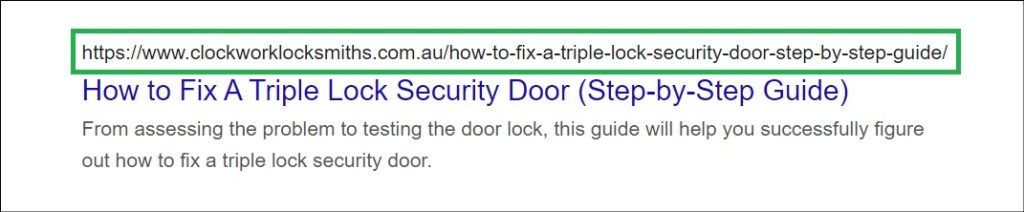
Your web address or URL should be understandable to users and search engines.
Keep URLs concise and descriptive where possible. Including the primary topic can help communicate context, but inserting an exact-match keyword is not mandatory. Avoid changing established URLs solely to add keywords, as doing so can create broken links and require redirects.
Structured Data Markup
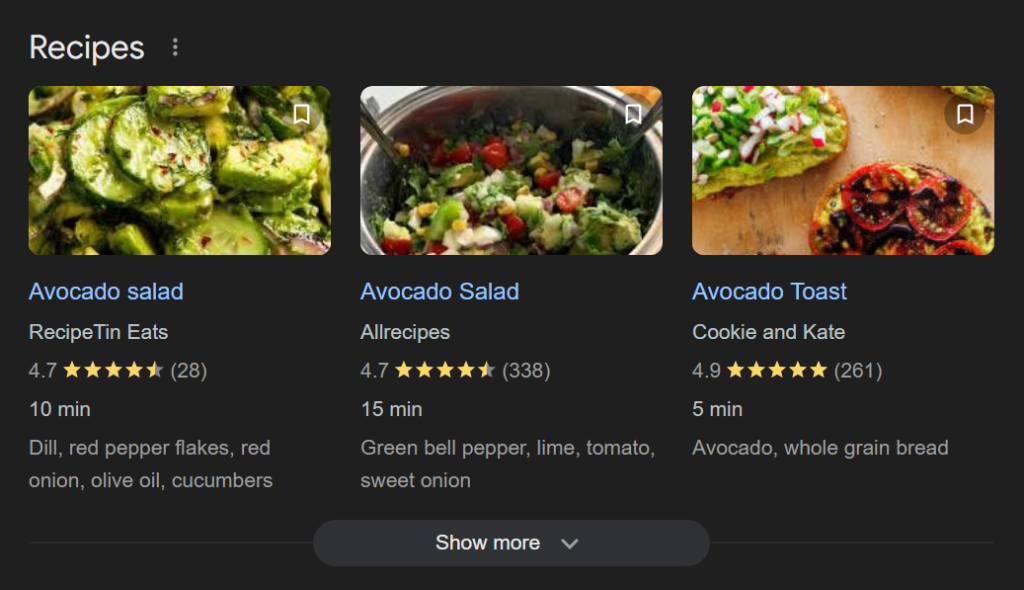
Structured data is code added to a page to help search engines understand eligible content. Correct markup can make a page eligible for certain rich results, but Google does not guarantee that those enhancements will appear.
Depending on the page, supported structured data may describe information such as a product, recipe, event, organisation or local business. The markup must accurately represent content that is visible to users and comply with Google’s relevant guidelines.
For example, supported recipe markup can make a page eligible to display details such as cooking time, ratings or ingredients in search results.
Pillar 3: Off-Page SEO – Building Authority and Reputation
Regarded by many as one of the hardest parts of SEO, off-page SEO involves strengthening your website’s authority, reputation and visibility through activities and signals beyond your own pages.
These efforts can help people and search engines recognise your site as a credible and useful resource.
While on-page SEO ensures your site is optimised and user-friendly, this pillar focuses on the external recognition needed to compete in search results.
Approach off-page SEO by prioritising the following components.
Backlink Building
Backlinks, or inbound links, are links from other websites to yours. Relevant editorial links can help people discover your content and can act as signals that other publishers consider it useful.
Quality generally outweighs quantity here.
A few relevant links from trustworthy sites can be more valuable than numerous links from low-quality websites. Links created mainly to manipulate rankings may be treated as spam and can harm rather than help your search performance.
Guest contributions can introduce your expertise to another website’s audience, but they should provide genuine editorial value rather than exist primarily as an exchange for a ranking link. Paid links should be appropriately qualified, such as with rel="sponsored", and links in large-scale campaigns should not use manipulative, keyword-rich anchor text.
Legitimate ways to earn attention and links include:
- Promoting useful content on relevant social media platforms
- Building genuine relationships with journalists, publishers and industry experts
- Finding broken resources where your content is a genuinely suitable replacement
- Publishing original research, tools or other valuable resources that people naturally want to reference
Social promotion and influencer activity can increase awareness, but they do not automatically create ranking value or guarantee backlinks.
Local SEO
If you have a physical location or serve customers in a defined area, local SEO can help nearby customers find your business.
This includes maintaining an accurate and verified Google Business Profile, where eligible businesses can provide information such as their location or service area, contact details, operating hours, photographs and customer reviews.
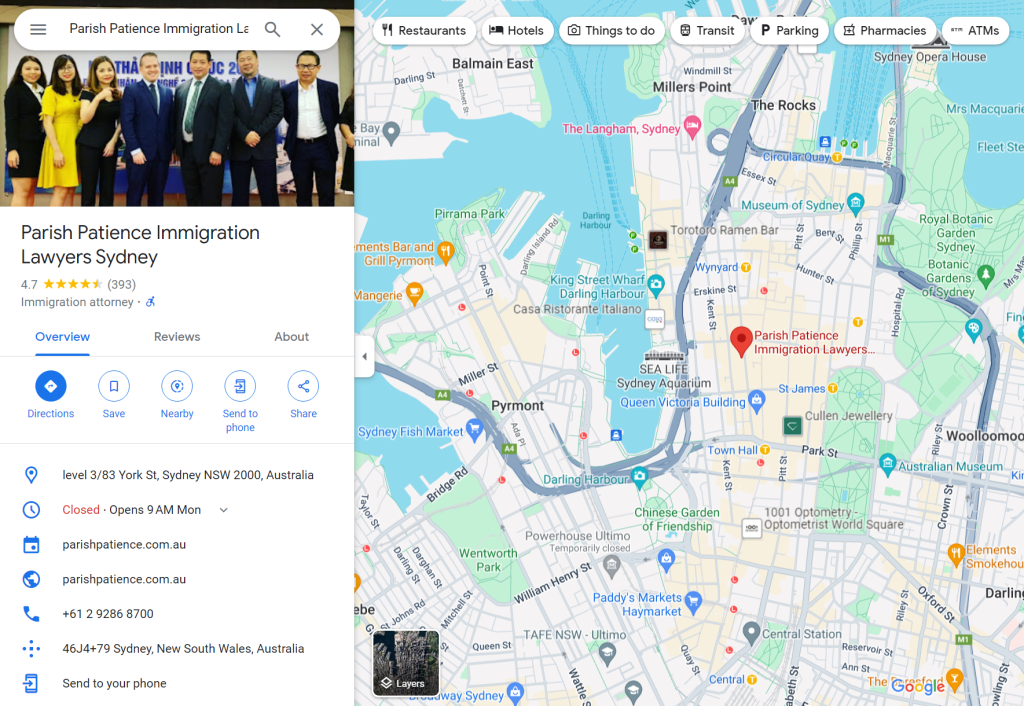
Local SEO overlaps several pillars rather than belonging exclusively to off-page SEO. It can involve local landing pages, consistent business details, reviews, citations, relevant local links and on-page location information, as well as the Google Business Profile.
Eligible local businesses, including law firms, dental clinics and cafés, can use these practices to improve their visibility in Google Search and Maps and potentially appear in local results.
Pillar 4: Content – The Heart of SEO
You’ve likely heard the popular phrase “content is king.” In SEO, content is vital because it attracts, engages and retains your audience while providing the relevance and usefulness search engines seek.
Creating and optimising high-quality content is essential for demonstrating experience and expertise, attracting relevant traffic and supporting organic visibility.
Your SEO checklist for content creation should include the following.
Content Strategy
The first major step towards creating content that is useful to your target audience is building a content strategy. It should align with your business and SEO goals while addressing your audience’s needs.
Start by defining your target audience and understanding their problems, interests and search behaviour. Plan content around these insights to improve relevance and engagement. Avoid producing pages on unrelated subjects merely because the keywords appear popular.
Content Creation
Creating high-quality content requires thorough research, clear writing and a focus on user intent. Ensure your content is:
- Original: Offers original experience, analysis, research or insight rather than simply rephrasing other pages
- Informative: Provides useful information and answers relevant questions
- Accurate: Uses reliable sources and is reviewed when facts change
- Engaging: Captures and maintains the reader’s attention
- Readable: Uses plain language and suitably short paragraphs
- Well structured: Uses descriptive headings, subheadings and lists where helpful
- Trustworthy: Includes appropriate authorship, evidence and sourcing
Content Optimisation
Writing useful content for people comes first. Content optimisation then helps present that information clearly and makes its subject easier for search engines to understand.
Review the on-page elements discussed above: use accurate titles and descriptions, organise the page with meaningful headings, include suitable images, add helpful internal links, and cover the subject in enough depth to satisfy the reader’s intent. Use relevant language naturally rather than forcing exact keywords and every possible variation into the copy.
AI tools can assist with research, structure and drafting, but published content should receive human review, factual verification and meaningful original input. Producing large volumes of unoriginal content primarily to manipulate rankings may violate Google’s spam policies, regardless of whether it was created by people or automation.
Content Distribution
Creating great content is just the beginning. Reach a broader, relevant audience by promoting your content through suitable digital channels.
Aside from your own website, you can promote your content through:
- Social media: Share content on platforms where your audience is active.
- Email marketing: Send useful content to subscribers who have expressed an interest in your products, services or expertise.
- Guest contributions: Write valuable material for reputable publications in your industry to reach a broader audience.
- Content syndication: Republish suitable content on platforms such as Medium or LinkedIn when it serves the audience, not merely to create links. Consider publishing an excerpt that links to the original article, or use an appropriate canonical reference when the platform supports it, so the original source is clear.
Ace the 4 SEO Pillars With Domain Bird
Need a marketing agency to help you implement the four pillars of SEO in your digital campaign?
Since 2013, Domain Bird has been a results-focused SEO agency helping Australian businesses, both large and small, support their online growth and profitability through organic search.
To get started, request our free SEO audit. One of our strategists will conduct a comprehensive review of your site’s health and provide practical recommendations for sustainable online success.
If you want not just more traffic but relevant leads and sales, contact us about our professional SEO services. Call +61 1300 783 962 or submit an enquiry through our contact form.